

Propaganda
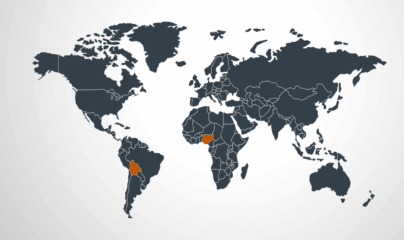
Identity Propaganda and Elections in Bolivia and N...
Group identity has the potential to be a strong political motivator. Political elites have long recognized this potentially powerful and evolving correlation. So too have propagandists. Oftentimes, they are one and the same. Read More

Anti-Disinformation Laws: Democratic Backsliding &...
A look at how ‘anti-disinformation’ laws exist within continuums of democratic backsliding that produce chilling effects. Read More

Generative Artificial Intelligence and Elections
The Center for Media Engagement investigates GenAI’s role before, during, and after several key global elections in 2024. Read More

Political Machines: Understanding the Role of AI i...
To better understand major trends and common concerns about the role of Generative AI in politics, the Center for Media Engagement conducted interviews with experts in the digital politics space. Read More
Values, Politics, and Misinformation: Examining Co...
This study aims to unpack the values that impact the Filipino diaspora’s political viewpoints and understand how political preferences are technologically communicated using these values. Read More

Platform Research Ethics for Academic Research
There’s been a lot of research on digital platforms. But how do we know these studies were conducted ethically? And what does it mean to conduct ethical research?
We examine the state of current platform studies ethics. Read More
The Role of Social Media in Iraq’s Tishreen ...
This report explores how Iraqis in the diaspora leveraged social media during the Tishreen movement to mobilize both online and offline activism. It also investigates how propaganda and false information shaped this activism. Read More

Misinformation on WhatsApp: Insights From the Cari...
WhatsApp has become a dominant platform for communication, entertainment, and news sharing among U.S. diaspora communities. It has also emerged as a significant source of misinformation. Complimenting ongoing and previous research, this report focuses on Caribbean diaspora communities. Read More

Encrypted Messaging Applications and Political Mes...
A look at the role EMAs play in global disinformation efforts and the manipulation of public opinion. Read More

Anonymous Civic Participation Behaviors: Differenc...
The Center for Media Engagement wanted to find out how some aspects of identity, such as gender, age, education, political orientation, and time spent online, are tied to the ways in which people participate in certain anonymous actions. Read More

Talking Politics on WhatsApp: a Survey of Cuban, I...
We asked WhatsApp users in three sub-groups (Cuban Americans, Mexican Americans, and Indian Americans) about their perceptions of the platform; their news and information consumption behaviors; and their encounters with false information. Read More
Texas’ Asian Communities and EMAs: How WhatsApp an...
Political campaigns across the United States are paying close attention to the rising political importance of Asian American communities across the country. Nowhere is this clearer than in Texas. Read More

Polarized Information Ecosystems and Encrypted Mes...
The Center for Media Engagement examined: How are encrypted messaging apps (EMAs) relevant for propagandists and/or activists in Egypt, Ethiopia, and Libya? How do these platforms fit into the existing (dis-)information landscape? Read More
Testimony: “A Growing Threat: The Impact of ...
Testimony of Samuel Woolley, Ph.D. for Congressional hearing "A Growing Threat: The Impact of Disinformation Targeted at Communities of Color." Read More

Escaping the Mainstream? Pitfalls and Opportunitie...
This report builds the foundation of our future research on diaspora communities, false information, and EMAs with regard to the 2022 mid-term elections and provides an assessment useful for the design of community-centric counter programs. Read More
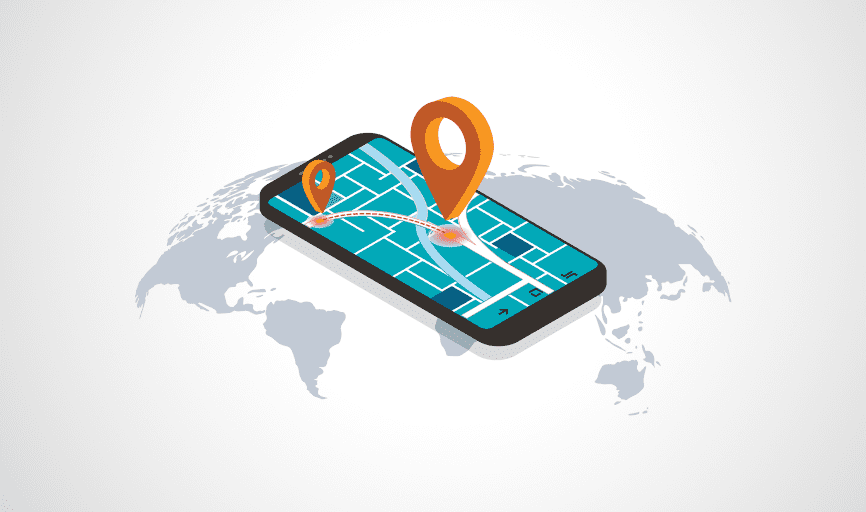
Location-Based Targeting: History, Usage, and Rela...
The Propaganda Lab at the Center for Media Engagement created an overview on location-based targeting, including its history, the technologies behind it, and its usage over the years. The report also includes recommendations addressing some key concerns. Read More
Political Talk in Private: Encrypted Messaging App...
The Propaganda Lab at the Center for Media Engagement expanded its research into the use of encrypted messaging apps (EMAs) for political talk, analyzing both how EMAs are used by people for everyday political talk and how EMA technology is being used for coordinated manipulation campaigns in Indonesia, Myanmar, the Philippines, and Ukraine. Read More

How Politics, Generation, News Use, and Time Onlin...
The Center for Media Engagement investigated how certain socio-political differences — including where people get their news, time spent online, political views, and age — relate to people’s views about anonymity. Read More

Disclosures of NYPD Surveillance Technologies Rais...
The disclosures by NYPD – the first required by the POST Act – raise substantial questions about how police in New York acquire and maintain data across dozens of surveillance systems, how NYPD thinks about safety and possible harms to society, and reveal new details about the suite of technologies enabling covert police activities on social media networks. Read More

Peer-to-Peer Texting and the 2020 U.S. Election: H...
New forms of direct communication, such as campaign apps and digital wallet passes on smartphones, are poised to bring political messaging to even higher levels of intimacy and efficacy, and, disturbingly, render them factually impossible to audit by outsiders. Read More

Encrypted Propaganda: Political Manipulation Via E...
The Center for Media Engagement propaganda research team spent the past year studying political manipulation on encrypted messaging applications (EMAs) in the U.S., India, and Mexico. Read More

Social Media Influencers and the 2020 U.S. Electio...
The Center for Media Engagement's propaganda research team reports on the phenomenon of social media influencers as an avenue for political campaign communications, describes the challenges this issue poses to platforms and governments, and briefly explores solutions. Read More