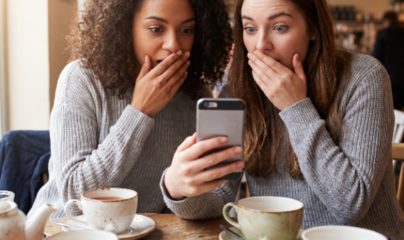


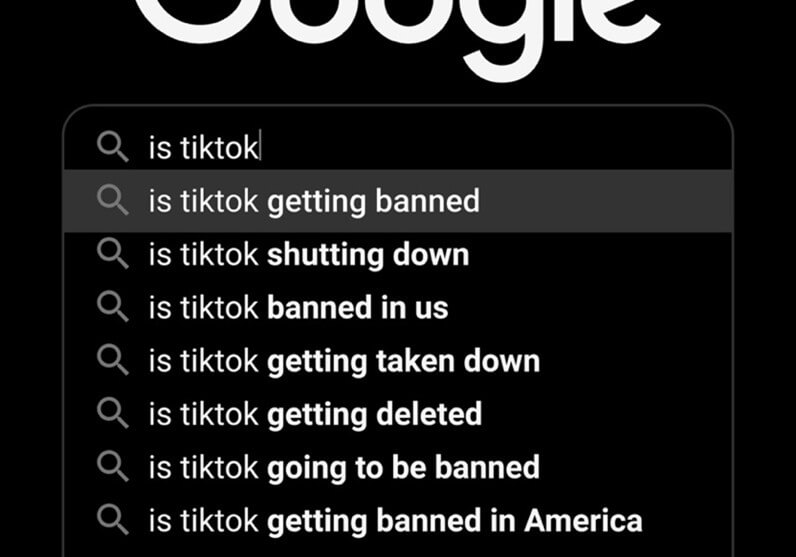
Since its initial release in 2016, TikTok has taken the United States—and arguably the world—by storm. Through harnessing the short form user-created content of over 2 billion users worldwide, the popular video sharing app has introduced a new form of social media responsible for countless pop culture trends and significantly increased global connectivity. Despite TikTok’s obvious popularity, the U.S. government has advanced multiple, sometimes conflicting, positions on the platform. Like an on-again/off-again relationship, the federal government has announced, postponed, avoided action, and forwarded again with fervor, intentions to ban TikTok in the U.S.
TikTok is well known for utilizing an especially sophisticated algorithm system in order to create a “For You Page” (FYP) that continuously and accurately adjusts the content a user sees based on their previously watched videos, searches, watch times, genres of videos, and other user-based factors. Thus, TikTok users (typically) experience a highly personalized and entertaining lineup of content on their FYP. However, the same technology that makes the app so appealing has also been criticized, specifically related to the company behind the platform. Originally forwarded by the House Energy and Commerce Committee, the Protecting Americans from Foreign Adversary Controlled Applications Act (PAFACA) cited concerns about the safety of user data and the app’s connection to foreign countries. Because TikTok is currently owned by ByteDance, a China-based technology corporation, lawmakers fear that the social media phenomenon is “beholden to the Chinese government” and could be used to spy on Americans or spread dangerous disinformation (Freking, 2024 and Allyn, 2024).
While “no public evidence has been presented of the Chinese government using the app as a weapon against Americans,” The Guardian reports that “leaked recording[s] of internal TikTok meetings” point to employees at ByteDance accessing “nonpublic data about U.S. TikTok users” (Allyn, 2024 and Milmo, 2022). While that may be true in the U.S., the concern is difficult to dismiss when records show that “a former executive at ByteDance… [said] in a legal filing that some members of the ruling [Chinese] Communist Party used data held by the [parent] company to identify and locate protesters in Hong Kong” (Soo, 2023). Incidents like these shed light on the potential misuse of user data and national security breaches. Thus, the PAFACA sought to “force TikTok to be sold to a [U.S.-approved] non-Chinese company [with]in nine months” (Allyn, 2024). The bill quickly passed in the House “with 352 affirmative votes and just 65 representatives dissenting,” then was signed into law by then-President Joe Biden on April 24, 2024 (Duffy, 2024).
In addition to national security concerns, some Americans further believe that TikTok should be banned due to its negative psychosocial effect on users, most of whom are impressionable young people. For example, a study conducted by Microsoft that found people who use TikTok for just 20 minutes experience a significant decrease in attention span and working memory as opposed to other social media platforms (Sijercic, 2023). Moreover, according to a study conducted by University of Minnesota Twin Cities computer science researchers, TikTok’s algorithm may repeatedly expose users to harmful content as much as it does entertaining content, including videos related to suicide, eating disorders, and cyberbullying (University of Minnesota, 2023). Thus, the culmination of the platform’s potential security concerns coupled with its negative influence on users’ mental health has led some to argue that banning TikTok may result in the greatest positive benefit to American society.
About one month after Biden signed the PAFACA, TikTok and ByteDance filed a legal challenge against the United States on May 7, 2024 (Porter, 2024). The petition, filed with the Court of Appeals for the District of Columbia Circuit, argues that “the legislation exceeds the bounds of the Constitution and suppresses the speech of millions of Americans” (Allyn, 2024). While it would be a violation for foreign entities to access U.S. user data, it would also be a violation to deprive American citizens of their individual right to freely choose which social media platforms they want to use, especially when there is no evidence to prove TikTok has ever engaged in such acts, nor is there any evidence that “the app has done any more damage or risked user privacy beyond what we’ve seen from companies like Facebook or Google” (Porter, 2024). In particular, ByteDance holds that the law is based on “speculative and analytically flawed concerns about data security and content manipulation — concerns that, even if grounded in fact, could be addressed through far less restrictive and more narrowly tailored means” (Allyn, 2024). For example, TikTok’s management team partnered with Austin-based tech company Oracle to delete all of Americans’ data from foreign servers and relocate it to servers on U.S. soil, vetting the platform’s algorithms prior to being released (Allyn, 2024). Nonetheless, “lawyers for TikTok say the deal was swept aside ‘in favor of [a] politically expedient and punitive approach’” that “disconnects Americans from the rest of the global community” (Allyn, 2024). Indeed, critics have argued that outright banning a wildly popular social media platform not only sets a dangerous precedent for any content publisher, but is also the same kind of move the U.S. government has “criticized authoritarian nations for doing” (Allyn, 2024).
Alongside legal concerns, some Americans argue that TikTok offers important benefits to American society that warrant keeping it active. As Duffy argues, TikTok is just not just a social media app, “it’s where [Americans can] go to find connection, get entertained, seek information, and earn a living” (Duffy, 2024). Indeed, TikTok has enabled users to create content to express themselves in multiple ways and easily find community with others, setting it apart from other social media platforms. Having come a long way from simple dance videos, users can find also find anything from educational content to civic advertisements on TikTok. In fact, despite significant bipartisan support for the PAFACA, many U.S. lawmakers and representatives have continued to use TikTok– including both the Biden and Kamala Harris 2024 presidential campaigns (Porter, 2024). Perhaps most crucially, TikTok has given thousands of Americans the ability to generate income from their videos, further bolstering the platform’s growth along with the U.S. economy. As such, critics of the PAFACA have argued that a complete ban would hinder foreign investment and “cannibalize business,” since “more than 90% of TikTok users reside outside of the U.S.” (Chander quoted in Allyn, 2024). While TikTok can be addicting and harbor harmful content, this is true of any social media platform. These issues have been actively addressed by the company, which has implemented reminder videos for users to stop scrolling and added greater user controls to block certain content.
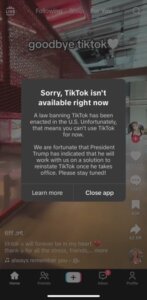 Despite the arguments in TikTok’s favor, the Supreme Court upheld the PAFACA and the app was scheduled to be banned in the U.S. on January 18, 2025 (Dedezade, 2025). Falling on his last day before leaving the White House, a Biden-admin official said that the President would not take action to enforce the ban, leaving its fate to his successor, current-President Donald Trump (Miller et al., 2025). After a global day of mourning the loss of Americans’ access to the platform, at midnight EST on January 19, “U.S. internet hosting services made TikTok unavailable to access, app stores removed [it] for download,” and American users who already had the app downloaded on their devices found that they could not login— not even with a VPN (Cross, 2025). In a dramatic turn of events, at 9AM the same day, President-elect Trump posted to Truth Social that he would “issue an executive order on [Inauguration Day] to extend the period of time before the law’s prohibitions take effect, so that we can make a deal to protect our national security” and outlined an idea for “the United States to have a 50% ownership position in a joint venture” (Trump, 2025). This move was surprising to many because Trump originally led the effort to ban TikTok during his first term in 2020 (Colvin & Ortutay, 2025). However, after utilizing the platform throughout his 2024 presidential campaign to connect with younger voters and assessing its worth as “hundreds of billions of dollars – maybe trillions,” Trump not only changed course, but “pledged to ‘save TikTok’” (Trump, 2025 and Miller et al., 2025). As promised, only 14-hours after the ban, TikTokers around the world reacted with shock and delight when the app returned to American servers, complete with a message thanking Trump for his efforts to keep TikTok active (Dedezade, 2025 and Colvin & Ortutay, 2025).
 Regardless of the initial excitement surrounding the platform’s un-banning, Trump’s intentions to keep it active, and the company’s continued cooperation to alleviate security concerns, TikTok’s presence in the U.S. remains uncertain, as the social media app has not yet struck a deal with a U.S.-approved buyer, nor has the PAFACA been struck down, remaining federal law. Since his Inauguration Day executive order giving TikTok its initial 75-day extension, Trump has issued two more executive orders to delay the app’s ban, even if it has yet to divest from ByteDance. In a recent interview with NBC News, Trump said he plans to extend the current deadline—set to expire on June 19, 2025—again (and again) if needed (Cross, 2025). Admist the confusing and dramatic series of events, “worries persist that Beijing could influence the views of Americans by dictating what videos are boosted on the platform” (Allyn, 2024). However, these fears (so far) remain hypothetical, as there is “no publicly available example of the Chinese government attempting to use TikTok as an espionage or data collection tool, [nor] proof that the Chinese government has ever had a hand over what TikTok’s 170 million American users see every day on the app” (Allyn, 2024). While some U.S. lawmakers argue that the PAFACA is regulatory measure rather than a “ban,” representatives for TikTok say the law only offers a “false choice, since fully divesting from its parent company is ‘simply not possible: not commercially, not technologically, not legally’” (Allyn, 2024). While the fate of TikTok continues to remain up in the air, one thing is clear: Regardless of the outcome, TikTok has changed the global social media landscape forever.
Discussion Questions
1. What ethical principles conflict in this case?
2. Do you support the PAFACA? Do you think TikTok should be banned in the U.S. or not?
3. What changes, if any, would you have made to the PAFACA to make it more ethical?
4. Should TikTok be allowed to continue operating in the U.S. even if ByteDance does not divest? Why or why not?
5. As a global phenomenon, what ethical principles may be compromised if ByteDance does agree to sell TikTok to a non-Chinese, U.S.-approved buyer?
Further Information
Allyn, Bobby. (2024, May 7). “TikTok challenges U.S. ban in court, calling it unconstitutional.” NPR. Available at: https://www.npr.org/2024/05/07/1246532784/tiktok-ban-us-court-biden-congress
Colvin, Jill, and Ortutay, Barbara. (2025, January 19). “From backing a ban to being hailed as a savior: Inside Trump’s TikTok shift.” AP News. Available at: https://apnews.com/article/trump-tiktok-ban-da11df6d59c17e2c17eea40c4042386d
Cross, Greta. (2025, May 6). “Will TikTok be banned on June 19? Trump says he’ll extend deadline yet again, if needed.” USA Today. Available at: https://www.usatoday.com/story/tech/2025/05/06/trump-extend-tiktok-ban-deadline/83480432007/
Dedezade, Esat. (2025, January 20). “TikTok Was Unbanned After Just 12 Hours: Here’s Why.” Forbes. Available at: https://www.forbes.com/sites/esatdedezade/2025/01/20/tiktok-was-unbanned-after-just-12-hours-heres-why/
Duffy, Clare. (2024, March 13). “Addicted to TikTok? Here’s what the House vote to effectively ban it could mean for you.” CNN. Available at: https://www.cnn.com/2024/03/13/tech/tiktok-ban-us-bill-explained/index.html
Freking, Kevin, Haleluya Hadero, and Mary Clare Jalonick. (2024 March 13). “House Passes a Bill That Could Lead to a Tiktok Ban If Chinese Owner Refuses to Sell.” AP News. Available at: https://apnews.com/article/tiktok-ban-house-vote-china-national-security-8fa7258fae1a4902d344c9d978d58a37
Habeshian, Sareen. (2024 March 13) “Tiktok Ban, Explained: Congress’ Yearslong Case against Bytedance.” Axios. Available at: www.axios.com/2024/03/12/tiktok-ban-explain-why-china-congress
Miller, Zeke, Boak, Josh, Price, Michelle L., and Jalonick, Mary Clare. (2025, January 17). “Biden won’t enforce TikTok ban, leaving fate of app to Trump, official says.” PBS News. Available at: https://www.pbs.org/newshour/politics/biden-wont-enforce-tiktok-ban-leaving-fate-of-app-to-trump-official-says
Milmo, Dan. (2022 November 7). “TikTok’s Ties to China: Why Concerns over Your Data Are Here to Stay.” The Guardian. Available at: www.theguardian.com/technology/2022/nov/07/tiktoks-china-bytedance-data-concerns
Porter, Jon. (2024, August 16). “TikTok ban: all the news on attempts to ban the video platform.” The Verge. Available at: https://www.theverge.com/23651507/tiktok-ban-us-news
Sijercic, Anur. (2023, January 15) “Tiktok Effects on the Attention Span.” Medium, Digital Reflections. Available at: https://medium.com/digital-reflections/tiktok-effect-on-attention-span-12211b0a06a1
Soo, Zen. (2023, June 7). “Former ByteDance executive says Chinese Communist Party tracked Hong Kong protesters via data.” AP News. Available at: https://apnews.com/article/tiktok-china-bytedance-user-data-d257d98125f69ac80f983e6067a84911
Trump, Donald. (2025, January 19). Truth Social post. Available at: https://truthsocial.com/@realDonaldTrump/posts/113855616848696050
University of Minnesota. (2023, April 18). “How is TikTok affecting our mental health? It’s complicated, new study shows.” Medical Xpress. Available at: https://medicalxpress.com/news/2023-04-tiktok-affecting-mental-health-complicated.html
Yurkevich, Vanessa. (2023, January 11). “Why experts worry TikTok could add to mental health crisis among US teens.” CNN. Available at: https://www.cnn.com/2023/01/11/tech/tiktok-teen-mental-health/index.html
Authors
Kat Williams, Shawn Mucklai, & Scott R. Stroud, Ph.D.
Media Ethics Initiative
Center for Media Engagement
University of Texas at Austin
May 16, 2025
Image by visuals on Unsplash
This case was supported by funding from the John S. and James L. Knight Foundation. It can be used in unmodified PDF form in classroom or educational settings. For use in publications such as textbooks, readers, and other works, please contact the Center for Media Engagement.
Ethics Case Study © 2025 by Center for Media Engagement is licensed under CC BY-NC-SA 4.0