




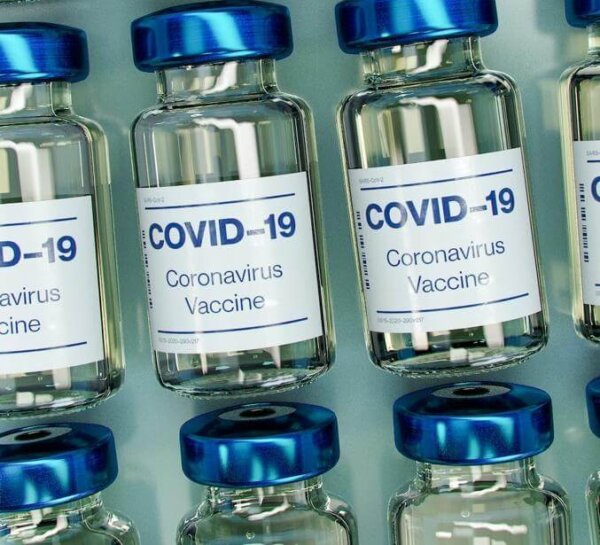
As the COVID-19 pandemic progressed, controlling or countering misinformation – the intentional spreading of false or misleading information – became a priority for many news organizations and social media platforms. For example, in September of 2021, YouTube decided to limit “content that falsely alleges that approved vaccines are dangerous and cause chronic health effects, claims that vaccines do not reduce transmission or contraction of disease, or contains misinformation on the substances contained in vaccines” (The YouTube Team, 2021). In a more pointed move, Twitter suspended Georgia Representative Marjorie Taylor Greene for 12 hours after she tweeted that COVID-19 “was not dangerous for people unless they were obese or over age 65” and that “vaccines should not be required” (Pruitt-Young, 2021). Another social media phenomenon has appeared where some COVID-19 vaccine posts are rife with misinformation, but the content is pro-vaccine. Since then, some have questioned whether all vaccine misinformation should be censored or whether pro-vaccine posts with misleading information can remain online. What do we do if false information encourages a generally healthy behavior?
In blogger Ann Marie Michaels’ two-part blog post titled “Trump’s Kill Shot,” the author (who is not a scientist or medical professional) includes a range of questionable or misleading information and inferences, along with references to conspiracies about the “Deep State” and “Big Pharma” that would typically be considered harmful or misleading (Michaels, 2021; she has recently published a post that asserts that the COVID-19 virus doesn’t exist). Echoing another blogger, Patel Patriot, she advocates for the use of certain vaccines out of trust in former President Trump’s pro-vaccine stance and even argues that certain Trump-connected vaccines disrupt the “Deep State’s plan” (Michaels, 2021). Though the blog uses unreliable sources and problematic patterns of inference from non-expert commentators, it ultimately encourages its audience to get vaccinated with one of the vaccines supposedly in development. In this sense, many wonder whether allowing misinformation that is pro-vaccine to remain online can produce positive outcomes. Indeed, regardless of the reason(s) one chooses to get vaccinated, in the end, it is important for as many people as possible to do, thereby increasing herd immunity and slowing the spread. Furthermore, as content moderators already have their work cut out for them, censoring the overwhelming amount of vaccine misinformation online, allowing pro-vaccine misinformation to slip through the cracks seems significantly less dire than removing anti-vaccine misinformation.
However, while more people getting vaccinated is important, others question whether positive outcomes are actually guaranteed. For example, when Patel Patriot ran a poll on their Telegram channel with the question “Has Trump’s pro-vaccine stance led you to get the vaccine?” the responses were illuminating: 99% said no and only 1% said yes (Patel Patriot, 2021). One commenter even directly refuted the post by referring to the COVID vaccines as “poison death shots” (Patel Patriot, 2021). This shows that even these bloggers’ target audience is largely unconvinced by their misinformed arguments. Furthermore, allowing conspiracies such as the existence of a “Deep State,” “Big Pharma,” and that Trump won the 2020 election to spread just because they also encourage COVID vaccines is highly problematic – especially when those dangerous narratives don’t appear to result in any positive consequences. In this sense, it seems that the (potential) greater good of herd immunity is placed in tension with the greater good of curbing conspiratorial thinking.
While Michaels’ and Patriot’s blog posts stretch one’s credulity, they do seem to be in favor of certain vaccines. These types of blog posts bring up an interesting possibility for misinformation: What if false and outlandish claims or tenuous inferences lead to healthy behaviors? What if people accept and use a certain vaccine because of information that is clearly false? How should platforms handle misinformation if it seems to promote healthy or pro-social behaviors? Blog posts like these show us that there is more to consider than just sorting out truth from falsity in the quest to encourage useful digital ecosystems.
Discussion Questions:
- Do you think pro-vaccine misinformation should be censored the same as anti-vaccine misinformation? Why or why not?
- Could there be a situation in which pro-vaccine misinformation should be tolerated? What would such a situation look like?
- Should blogging platforms follow the lead of other social media companies and begin censoring the posts that bloggers post using their platform? If yes, what type of content should they censor, and how should they go about doing so?
- Would allowing pro-COVID vaccine misinformation to remain online set a precedent for other types of misinformation? Are there certain topics that should be censored if misinformation is present, no matter what?
Further Information:
Conger, K. (2021, July 20). “Twitter suspends Marjorie Taylor Greene for posting coronavirus misinformation.” The New York Times. Available at: https://www.nytimes.com/2021/07/19/technology/marjorie-taylor-greene-twitter.html
Galston, W. A. (2021, October 1). “For covid-19 vaccinations, party affiliation matters more than race and ethnicity.” The Brookings Institution. Available at: https://www.brookings.edu/blog/fixgov/2021/10/01/for-covid-19-vaccinations-party-affiliation-matters-more-than-race-and-ethnicity/
Patel Patriot. (2021, December 26). “Devolution – Part 15.” [Web log]. Available at: https://patelpatriot.substack.com/p/devolution-part-15/comments
Michaels, A. M. (2021, December 29). “Trump’s Kill Shot.” [Web log]. Available at: https://www.annmariemichaels.com/trumps-kill-shot/
Pruitt-Young, S. (2021, September 29). “YouTube is banning all content that spreads vaccine misinformation.” NPR. Available at: https://www.npr.org/2021/09/29/1041493544/youtube-vaccine-misinformation-ban
The YouTube Team. (2021, September 29). “Managing harmful vaccine content on YouTube.” [Web log]. Available at: https://blog.youtube/news-and-events/managing-harmful-vaccine-content-youtube/
Authors:
Scott R. Stroud, Ph.D., Claire Coburn, & Kat Williams
Media Ethics Initiative
Center for Media Engagement
University of Texas at Austin
October 24, 2025
Image by Daniel Schludi on Unsplash
These cases can be used in unmodified PDF form in classroom or educational settings. For use in publications such as textbooks, readers, and other works, please contact the Center for Media Engagement.